Finding One's Way: Spatial Cognition, Orientation, and Mental Health
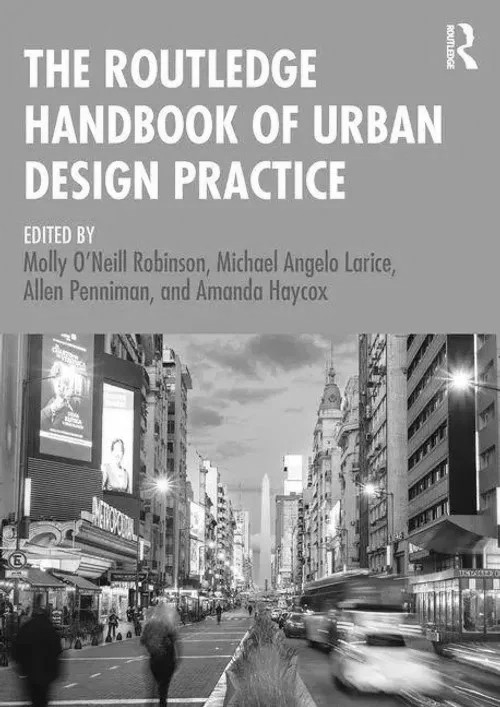
Mondschein, A. "Spatial Cognition, Mental Health, and Well-Being." Chapter 7.2 in The Routledge Handbook of Urban Design Practice. London: Routledge. DOI: 10.4324/9781003013655-65
The way we come to know a city is a cognitive achievement with consequences for our psychological well-being. Andrew Mondschein develops this argument in his chapter "Spatial Cognition, Mental Health, and Well-Being", where he brings together the tradition of cognitive mapping in urban design, recent neurobiological research on the hippocampus, and the growing influence of digital technologies on how people move through urban space. His conclusions address urban designers and extend to anyone who works with people in their everyday environments, coaches included. Orientation, in the spatial sense, turns out to be closely connected to orientation in the existential sense: the capacity to set goals, to choose among paths, and to experience oneself as the author of one's own movement through the world.
From Lynch's Mental Maps to Spatial Learning
Since Kevin Lynch published The Image of the City in 1960, urban designers have worked with a typology of five elements through which people perceive and remember cities: landmarks, nodes, paths, districts, and edges. Lynch called a city "imageable" when its arrangement of these elements allows people to form a clear and coherent mental picture of it. Mondschein takes this framework as his starting point and broadens it considerably. Cognition, in his reading, comprises the whole process by which we gather information from our senses, from maps, and from apps, assign values to the features we perceive, and finally make decisions on that basis. In his formulation, cognitive processes turn spaces into places.
Research in human geography and environmental psychology has long emphasised that this process is one of learning. Each walk down a street and each meeting with friends at a familiar corner adds to and refines the cognitive map. The mode of engagement shapes the outcome. Studies on transport show that cognitively "active" modes such as walking and driving produce more accurate cognitive maps than "passive" modes such as riding public transport or being driven by someone else (Mondschein, Blumenberg and Taylor 2010). Spatial learning also proceeds unevenly across individuals and social groups, a finding with implications for questions of equity and access to the city.
The Hippocampus as a Spatio-Temporal Organ
The neurobiological dimension of the chapter is perhaps its most striking contribution. In 2014, John O'Keefe, May-Britt Moser, and Edvard Moser received the Nobel Prize in Physiology or Medicine for identifying the cellular basis of cognitive maps. So-called place cells and grid cells in the hippocampus organise themselves in response to external stimuli and form the physiological foundation for spatial orientation and decision-making.
The same brain region is also the seat of episodic memory, the organisation of past experiences in temporal sequence. Memory and cognition in the hippocampus are therefore "four-dimensional", integrating space and time. Mondschein connects this to our evolutionary history, in which hunting, gathering, and other survival activities required both spatial knowledge and the memory of a sequence of necessary actions. A commute or a Saturday trip to the market draws on the same capacities today. Since all of this cognitive work serves self-defined goals, Mondschein interprets our spatio-temporal experiences, many of which take place in urban settings, as a form of self-actualisation in Maslow's sense, a fulfilment of human potential that contributes to psychological well-being.
Cognitive Reserve and the Exercise of Orientation
Spatial abilities are also associated with overall mental health. Age-related cognitive decline and conditions such as Alzheimer's disease frequently affect the capacity to navigate early on. Research indicates that cognitively demanding activities, navigation and wayfinding among them, are associated with a slower course of decline (Wilson et al. 2013). The well-known studies of London taxi drivers, who must memorise the city's intricate street network, have led neuroscientists to propose the concept of a "cognitive reserve": a resource built up through sustained cognitive effort that can delay the effects of decline. Mondschein uses the metaphor of a muscle. Spatial cognition, regularly exercised, may yield long-term benefits for health and well-being.
The Delegation of Orientation to Technology
At this point the chapter turns to a development that most of us experience daily. Information and communication technologies have positioned themselves as powerful mediators between people and places. Many people rely on GPS navigation even within their home cities. Research shows that such reliance weakens the cognitive map, which becomes less developed and less accurate (Ishikawa et al. 2008). Recommendation platforms such as Yelp take over a further step, the choice of destination itself, by replacing personal spatial knowledge with algorithmic rankings based on crowdsourced ratings. Portable media add a third layer: a continuous stream of stimuli unrelated to the surroundings, which occupies attention even in the middle of a lively street.
Mondschein expects automated vehicles to intensify this tendency, since automation would turn every car journey into the equivalent of a taxi ride and remove any demand for attention or decision-making. The effects are likely to be greatest at the scale of the city-region, where the cognitive map may lose its coherence altogether. Local neighbourhoods explored on foot should, in principle, remain more resilient. Even here, distraction reduces engagement with the immediate environment, and recommendation technologies draw people away from their own neighbourhoods towards destinations elsewhere.
The chapter also acknowledges the constructive potential of these technologies. Digital tools can render visible what the senses cannot perceive, such as air pollution or contaminated water, and in this way they can feed a more informed cognitive map. The question, then, concerns the kind of relationship between digital and physical layers that designers and users cultivate.
Strategies for a Cognitively Engaging City
Drawing on Lynch's later observation in A Theory of Good City Form that "the process of cognition is of greater value than the resulting mental structure", Mondschein places learning at the centre of urban design. He also cautions that places do not automatically imprint themselves on their inhabitants. In a distracted and mediated age, individuals and communities need to engage deliberately with their surroundings in order to benefit from them. He proposes three complementary strategies.
The first concerns infrastructure. Reducing car traffic in neighbourhoods encourages walking and cycling, which resist cognitive passivity. The Barcelona superilles (superblocks) serve as an instructive example, converting previously unrestricted streets within the existing grid into pedestrian and cycling neighbourhoods. Street networks can also be designed with deliberately varied environments that invite discovery and genuine choice between routes, which counteracts the logic of algorithms optimised for the shortest distance.
The second strategy adds new layers of meaning to existing places. The Networked Public Space project in Shockoe Bottom, Richmond, Virginia, uses sensors to measure air quality in a neighbourhood whose residents still bear the consequences of historic decisions to route highways and rail lines through it. The data are published online and also made visible in public space through responsive light installations. In this way, environmental injustice and the history of the place become perceptible, and the spatial fabric gains meaning and an impetus for collective action.
The third strategy concerns learning, play, and intentionality. Spatial cognition may be shifting from something people once did out of necessity to something they now do by choice. Mondschein refers to the psychiatrist Mindy Fullilove, whose practice of "finding the elephants" organises exploratory walks through which residents learn about their neighbourhoods together. Signage, amenities, and gamified hybrid formats can support such experiences of collective exploration.
Implications for Coaching Practice
For a systemic-integrative approach to coaching, which understands people as embedded in their environments, the chapter offers several productive connections. The first lies in the close neurobiological link between spatial knowledge, episodic memory, and the sense of self. Clients who speak of feeling disoriented, lost, or without direction often describe their situation in spatial metaphors, and these metaphors draw on the same cognitive architecture that guides us through a city. Working with such images in coaching, for instance through spatial constellations, timelines laid out on the floor, or sketched personal maps, engages capacities that are physiologically anchored in the hippocampus.
A second connection concerns walking as a coaching setting. Walk-and-talk formats place the conversation within an active, embodied mode of movement in which attention to the surroundings and reflection on one's own situation can support each other. Choosing a route together, pausing at a landmark, or crossing an edge between two districts can become occasions for reflection on decisions, transitions, and boundaries in the client's life. The phenomenological tradition in geography, from Otto Friedrich Bollnow's hodological space to Yi-Fu Tuan's topophilia, has long described this intertwining of movement, place, and experience.
A third connection concerns autonomy. Mondschein's argument suggests that the habitual delegation of orientation to devices also delegates a small but meaningful part of our agency. Coaching can invite clients to notice where in their everyday lives they have handed over choices to algorithms and routines, and where they might reclaim them. A deliberate walk without navigation through an unfamiliar part of one's own city can serve as a modest experiment of this kind, an exercise in tolerating uncertainty and trusting one's own perception.
Closing Reflection
Mondschein concludes that the decision to put away the phone, open one's senses, and learn the surrounding environment is ultimately an individual one, and design can create the conditions that make such decisions more likely and more rewarding. Recent neuroscience confirms that these experiences remain relevant for cognitive health and well-being. For urban designers, the task is to create places that call for attentive engagement and active choice. For coaches, the chapter offers a reminder that the city is a resource for reflection and growth, and that the ability to find one's way through it is intimately connected with the ability to find one's way in life.
Further reading
Lynch, K. 1960. The Image of the City. Cambridge, MA: MIT Press.
Lynch, K. 1981. A Theory of Good City Form. Cambridge, MA: MIT Press.
Fullilove, M. T. 2013. Urban Alchemy: Restoring Joy in America's Sorted-Out Cities. New Village Press.
Mondschein, A., E. Blumenberg, and B. D. Taylor. 2010. "Accessibility and Cognition: The Effect of Transport Mode on Spatial Knowledge." Urban Studies 47 (4): 845–866.
Ishikawa, T., H. Fujiwara, O. Imai, and A. Okabe. 2008. "Wayfinding with a GPS-Based Mobile Navigation System." Journal of Environmental Psychology 28 (1): 74–82.
Wilson, R. S. et al. 2013. "Life-Span Cognitive Activity, Neuropathologic Burden, and Cognitive Aging." Neurology 81 (4): 314–321.