Not the Socratic method
The term “Socratic method” circulates easily in contemporary coaching discourse. It often appears as a certain way of asking questions, for a style of dialogue in which the coach refrains from giving advice and encourages the coachee to find their own answers. The Greek word maieutikê (μαιευτική), usually translated as “intellectual midwifery”, is sometimes invoked as a noble ancestry for this practice. Yet the historical practice that Plato presents under this name is a very precise form of elenchos (ἔλεγχος), a refutational cross‑examination that places the interlocutor under logical pressure and regularly leads into aporia (ἀπορία), a state of perplexity.
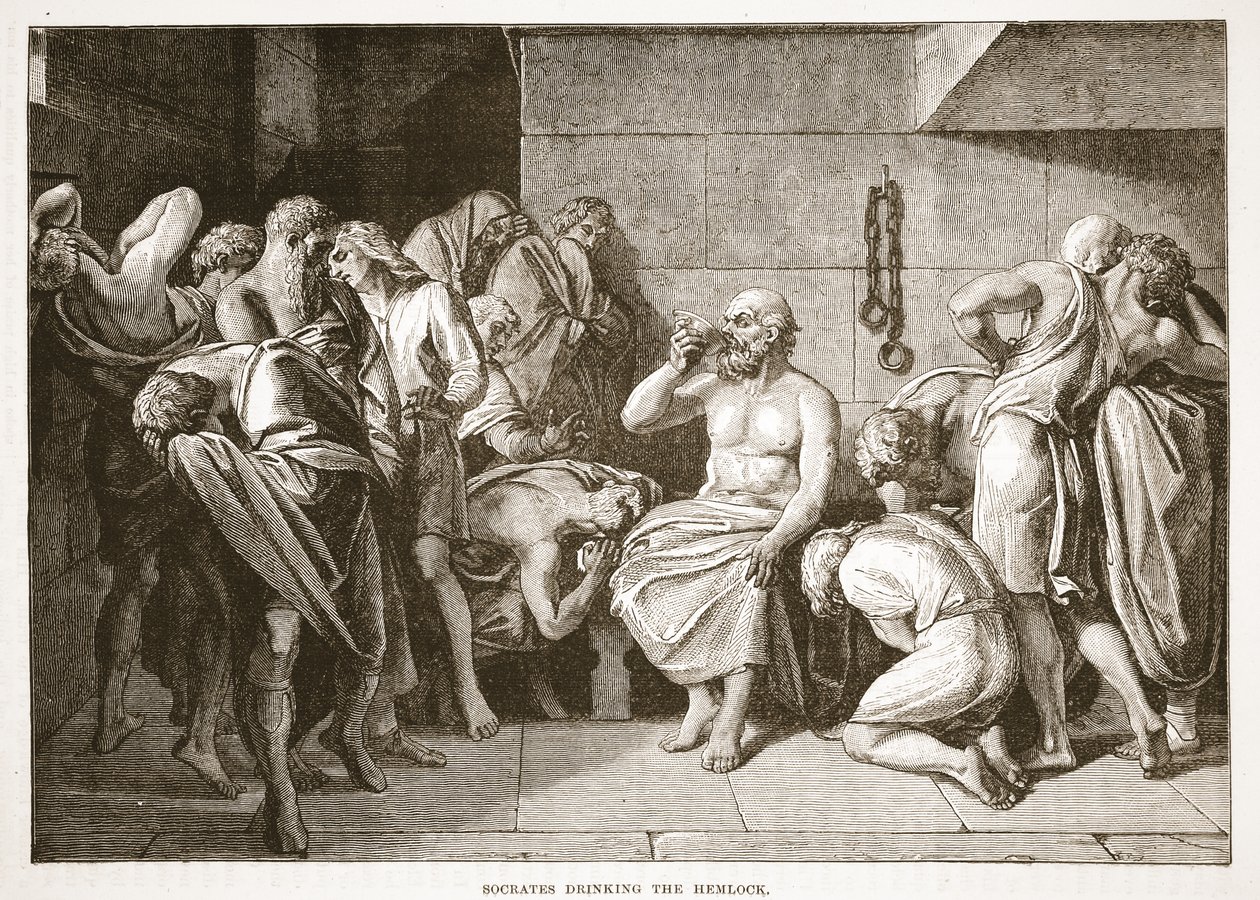
What is the Socratic method?
In the early dialogues, Socratic maieutikê unfolds within a culture marked by agôn (ἀγών), contest. An interlocutor offers a definition or a thesis - about courage, justice, piety, knowledge - and Socrates proceeds through a sequence of questions that rely only on premises the interlocutor has already accepted. Step by step, he exposes enantia (ἐναντία), contradictions inside the person’s own doxa (δόξα), opinion. The method is a form of dialektikê (διαλεκτική), a movement through logos that tests the coherence of what is said. Socrates’ eirôneia (εἰρωνεία), his ironic presentation of himself as ignorant, reinforces the asymmetry: the interlocutor believes they are instructing him and discovers, often in public, that their position collapses under examination. The affective tone of such a procedure can be described as antagonistic, even when Socrates insists that he seeks cooperation in the search for epistêmê (ἐπιστήμη), genuine knowledge.
Maieutikê belongs, in this context, to paideia (παιδεία), the formation of the citizen through education. The aim is to form a subject capable of aretê (ἀρετή), virtue, by dismantling unexamined assumptions about the good, the just, and the noble. The midwife metaphor indicates that the interlocutor carries latent truth within, in the framework of anamnesis (ἀνάμνησις), recollection of Forms. Socrates claims to assist in the “birth” of this latent knowledge, to test whether the offspring is genuine or pseudes (ψευδές), false, and to send the interlocutor away if they are not ready. The practice is demanding and ethically ambitious. It is designed to unsettle and to reshape, not to reassure.
The Socratic method in coaching
When coaching borrows the language of “Socratic method” or “maieutic questioning”, it usually refers to a different kind of activity. In coaching, the conversation centres on the coachee’s lived bios (βίος), their concrete practices of work, relationship, and everyday life, often under conditions of stress and vulnerability. The relation is asymmetrical in another sense: the coachee comes with a concern, the coach offers a space of reflection and support. The aim is to foster phronêsis (φρόνησις), practical wisdom, and epimeleia heautou (ἐπιμέλεια ἑαυτοῦ), care of the self, in ways that protect dignity and psychological safety. A procedure built around exposing contradictions and leading someone into aporia would risk humiliating rather than supporting, especially where the coachee already carries experiences of being underestimated or infantilised.
For this reason, the antagonistic core of the Socratic elenchus marks a limit for its use as a model in coaching. A coaching dialogue may share the form of dialogos (διάλογος), structured conversation, and may trace the implications of certain narratives or decisions. It may attend to internal tensions in a coachee’s account of their situation. Yet its ethos differs. The coach does not enter as a logical opponent whose task is to dismantle the coachee’s positions in order to demonstrate their ignorance. The coach’s questions aim at diakrisis (διάκρισις), clarification, and synesis (σύνεσις), understanding, rather than at katabole (καταβολή), overthrow, of what the coachee brings.
Moving forward
If the term “Socratic” is retained in coaching, it should be accompanied by an awareness of this divergence. The historical maieutikê presupposes a strong theory of truth and a hierarchical view of knowledge, where the midwife of ideas occupies a privileged position in relation to the interlocutor’s access to Forms. Coaching does not claim such an epistemic privilege. Its task is more modest and more situated: to accompany another person as they examine their own life, with as little antagonism as possible, and with a clear sense of the limits of the coach’s role. A conceptual model drawn from phenomenological description, systemic inquiry, or dialogical ethics may be more appropriate than an idealised image of Socratic practice.